ADHD Fidget Toys
Fidget toys that actually work for ADHD — quiet enough for meetings, discreet enough for classrooms, and engaging enough to support focus.
Not every fidget toy is a good ADHD fidget. A clicker pen in a meeting will get you side-eye from coworkers. A spinner in a classroom will get confiscated. A fidget that requires both hands won't survive your daily commute. The right ADHD fidget is quiet, discreet, single-hand, and engaging enough to occupy attention without becoming its own distraction.
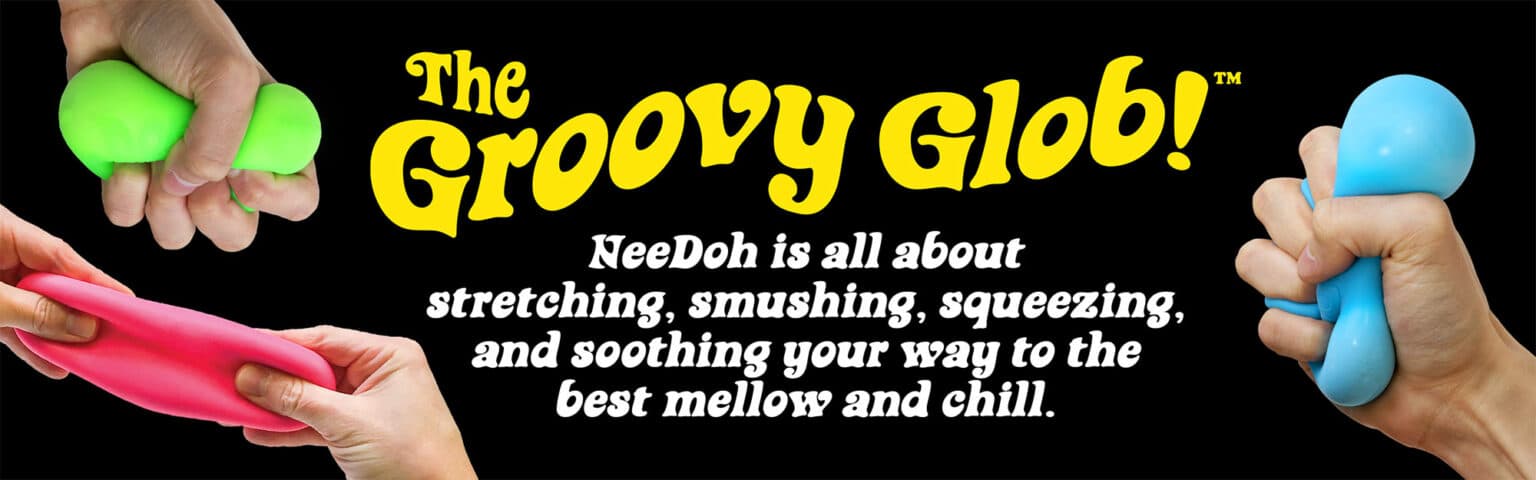
This is exactly the niche the Schylling NeeDoh line sits in. The whole product family is silent, pocket-sized, and based on slow-rise tactile feedback — three properties that make NeeDohs unusually well-suited as ADHD fidgets compared to most of the category.
What makes a fidget actually work for ADHD
Three criteria, in this order:
1. Quiet
If the fidget makes noise, you can't use it in the environments where you need it most — meetings, classrooms, libraries, shared offices. This rules out clicker pens, magnetic balls, fidget spinners, and Pop-Its. NeeDohs are silent.
2. Single-hand
ADHD focus support has to coexist with whatever you're actually doing — typing, writing, listening. If the fidget needs both hands, you can't use it while you work. Squeeze-based fidgets (NeeDohs, stress balls) and small twirl-based ones (worry stones, fidget rings) work. Magnetic balls and Tangle toys don't.
3. Continuous tactile feedback (not intermittent reward)
There's a difference between click-style fidgets (intermittent reward — "click, click, click") and continuous-feedback fidgets (steady tactile input — "squeeze, release, squeeze, release"). Continuous-feedback fidgets are better for focus support because they occupy the part of attention that wanders without competing for your conscious attention. Click fidgets demand your attention with each click; squish fidgets let you fade attention back to your work.
NeeDohs are continuous-feedback. So are worry stones and chewable jewelry. Pop-Its and clicker pens are not.
Best NeeDoh picks for ADHD
Across all three criteria, three NeeDoh SKUs stand out for ADHD use:
Nice Cube — the daily-driver
The flagship Nice Cube is the most-cited NeeDoh in r/ADHD threads. It's the size of a small apple, fits one-handed, and the slow-rise compound gives 2-3 seconds of tactile feedback per squeeze — enough to feel productive without being demanding.
Gumdrop — for harder squeezers
If you're a heavy fidgeter — the kind of person who breaks pens, wears down erasers, and finds the Nice Cube "too easy" to squeeze — the Gumdrop's firmer compound and textured exterior is the right step up. Same Schylling quality, more resistance.
Nice Ice Baby — for school and public use
The 1.25-inch mini Nice Cube is the right pick for environments where you need the fidget to stay genuinely invisible. It fits in a closed fist, in a pocket, in a pencil case. It's the version teachers and meeting-attendees don't notice.
Three ADHD picks from the NeeDoh line
School and workplace policy notes
Most schools that allow fidget tools require them to be quiet, single-hand, and not distract other students. NeeDohs pass all three. Some districts explicitly include slow-rise squishies on their approved-fidget lists — if you're advocating for fidget access in a classroom, the case is straightforward.
Workplaces are mostly unregulated, but the social signaling matters. The Nice Ice Baby mini in particular is small enough that a coworker won't notice you're using one, which makes it a safe pick for environments where "adult with a fidget toy" still reads weird.
What not to buy for ADHD
- Fidget spinners — old trend, take both hands to start, and the visual spinning competes with your attention rather than supporting it.
- Clicker pens — banned in most classrooms and offices for a reason.
- Pop-Its for adults — kids love them; adults usually find them too click-driven for focus support.
- Magnetic ball sets — require both hands, get confiscated in schools (and are a swallowing hazard for younger kids).
- Anything that smells strongly — counterfeit squishies often arrive with chemical odors that defeat the purpose of a calming tool.
Kids vs adults: different picks
For kids, smaller sizing matters more — younger hands can't fully grip a 2.5-inch Nice Cube comfortably, so the Nice Ice Baby is often the better starter pick. Visually engaging variants (Jellyfish, Dream Drop) also tend to hold kid attention longer.
For adults, the trade-off flips. The full-size Nice Cube fills the palm in a way the mini can't, and most adult use cases (desk fidget, meeting fidget, commute fidget) are private enough that the larger size isn't a problem. If you can have only one NeeDoh as an adult, the Nice Cube is the pick — and the Nice Cube vs Gumdrop comparison covers when to step up to a firmer compound.